


You own a house in Canada, whether it is a 1970s bungalow in Hamilton or a more recent construction in Calgary, you have plumbing pipes just quietly doing one of the most difficult jobs in the house. They bring clean water to your taps, they remove garbage and they must endure the ruthless freeze-thaw processes that the Canadian winters subject them to year after year.
The majority of homeowners do not put their pipes into consideration until the time when things go wrong. A burst pipe at 2 a.m. in January, a mysterious spot on the basement ceiling or a water bill that suddenly shoots are the events that make the conversation necessary. However, the reality of the matter is, it is nearly always costly not to be proactive in waiting until there is a crisis.
One of the most important aspects of your home infrastructure is your plumbing pipes, and they are silently going about their business on a daily basis behind your walls, and under your floors. These pipes are under continuous stress in Canadian households because of severe fluctuations in temperature, particularly when the pipes are being frozen in winter and also when they are being thawed in spring.
All the plumbing pipes, no matter how good material they are initially, in the course of time, start to weaken, corrode or have unseen leaks. Being aware of the time when they need to be replaced will enable you to prevent unexpected situations, water damage, and expensive repairs that will interfere with your home and day-to-day life.
And what makes you know when your plumbing pipes need replacement? Let’s walk through it.
What Are Plumbing Pipes and Why Do They Matter?
Plumbing pipes are tasked with the job of supplying clean water into your taps and safely draining away wastewater in your house. Your home plumbing system including your kitchen sink and bathroom fixtures rely on the proper operation of pipes.
Some of the most popular pipe materials used in Canada are copper, PEX, PVC and the older galvanized steel systems. All types have variations in their durability, although all pipes age and most of them need replacement or some form of maintenance to ensure that your plumbing in the household operates smoothly.
How Long Do Different Plumbing Pipes Actually Last?
Not every pipe is created equal and the material is more important than most of the homeowners may think. In Canadian homes, the following are the quick types of pipes:
- Copper pipes – Copper supply pipes have a life span of about 80 years on average, and it is one of the more long-lasting pipes in the residential plumbing.
- Galvanized steel pipes – Galvanized steel pipes are susceptible to corrosion and may require replacement after 20 to 50 years.
- PVC pipes and drain pipes – These normally last between 50 to 70 years with normal conditions.
- Poly-B (polybutylene) pipes – A significant issue among the Canadian domestic owners. Poly-B pipes were a cost-effective alternative in piping that was commonly used in homes across Canada during the 1980s and 1990s and it would not take long before the problems started being more than the gain. This is the first thing you should be concerned about in case your house was constructed in that period.
Assuming you have original plumbing, then it would be prudent to look at a half replacement by around 30-40 years of age and highly consider a complete replacement by around 40-60 years old, again depending on the material and signs you are experiencing.
7 Clear Signs Your Plumbing Pipes Need to Be Replaced
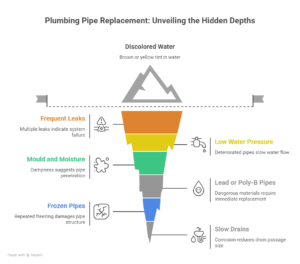
1. Your Water Has a Brown or Yellow Tint
A brownish colored water is a common sign of corroded pipes. Most likely, your water supply has rust particles in it. When you have been away a few days and turn on the tap and the water runs discoloured, that is a red flag. Don’t overlook it, not even when it does not clear in a minute or two. Call a local plumbers professional for a proper inspection and plumbing leak detection assessment.
2. You’re Dealing With Frequent Leaks
One leak is a repair. The year of three leaks is a trend. Keep in mind, each and every pipe in your house is of the same age and material, so once the leaks begin to appear in one section of your house, chances are that they will come to other sections, too. Repeated pipe leak repair calls is an indication that your system is failing not only in one area but the whole system.
3. You Have Consistently Low Water Pressure
The insides of old pipes can deteriorate and slow the flow of water, resulting in low water pressure from your sinks and showers. If you’ve noticed your morning shower feeling weaker than it used to, or your bathroom faucet dripping even after you’ve had it checked, aging pipes could be the culprit. Persistent low pressure warrants a full home plumbing evaluation.
The interiors of old pipes may rot and clog water flow, leading to low pressure of water in your sinks and showers. Unless you have realized that your morning shower is not as powerful as it used to be or your bathroom faucet dripping after you had it replaced, it is possible that the old pipes are the root of the problem. Continuous low pressure is an indication that should not be ignored and a complete home plumbing assessment is warranted.
4. You’re Seeing or Smelling Mould and Moisture
Dampness with no explanation, moldy odors in your cellar, wet areas on walls and ceilings are severe warning signals. Even sluggish draining can be a sign that the tree roots in the area have penetrated your pipes and this can ultimately result in their total collapse. In Canada, when it comes to basements leaking and basement leak repair calls, the causes of the problem frequently lead back to the decline of the drain pipes, which were not maintained long enough.
5. You Have Lead or Poly-B Pipes
Houses constructed prior to the year 1980s can still be having lead pipes that are extremely dangerous to human health and must be substituted without delay. Exposure to lead is associated with developmental problems in children and kidney problems in adults. Likewise, even with Poly-B pipes in good or bad conditions, it is advisable that you engage professionals to get them replaced to avoid compromising the health of your plumbing system and your home.
6. Your Pipes Keep Freezing in Winter
Canadian winters are no joke. One of the most frequent types of emergency plumber calls during the months of November to March are plumbing frozen pipes. Small leaks are to be repaired as soon as possible before they develop into serious issues and a frozen-and-thawed pipe several times is damaged structurally. When you are working on unfreezing frozen pipes regularly, you might need to start considering rerouting or replacing the frozen parts.
7. Your Drains Are Constantly Slow or Backing Up
Clogs in various regions of your house aren’t only a nuisance, it’s a sign. Corrosion within the drain pipes will reduce the size of the passage as time passes and no drain cleaner can cure structurally damaged pipes. Hydro jetting may temporarily clear blockages in these situations, although when the walls of the pipes have decreased in strength a clogged sewer line or full sewer line repair near me service can be required.
Signs You Need to Replace Plumbing Pipes
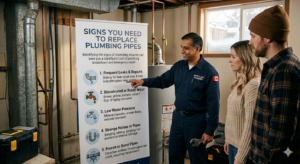
Identifying the signs of impending disaster can save you a significant cost of plumbing breakdown and emergency repair.
1. Frequent Leaks and Repairs
When you find yourself dialing the phone over and over again to get a pipe leak repair or plumbing leak repair, this is usually indicative that your pipes are nearing their expiry date. Minor leaks can be seen as insignificant but are normally good indicators of further system degradation.
2. Discoloured or Rusty Water
Tasting that is brown, yellow, or metallic may be an indication of corrosion within aging pipes. The problem is particularly widespread in houses that have an old plumbing system.
3. Low Water Pressure
The resultant effect of mineral deposition, the presence of undetected leaks, or decreasing pipe diameter could all be indicative of aging infrastructure and may result in a noticeable reduction in water pressure in your home.
4. Strange Noises in Pipes
Banging, rattling or gurgling together in pipes may be an indication of air pockets, pressure and internal damage which should not be overlooked.
5. Frozen or Burst Pipes
Plumbing frozen pipes that can crack are a common occurrence in Canadian winters. When a burst pipe occurs due to freezing, it needs to be replaced to avoid more structural damage.
Does Your Home’s Age Tell You Anything?
Yes, quite a lot, actually. Here’s a quick rule of thumb for Canadian homeowners:
- Homes built before 1960 likely have galvanized steel or lead pipes. Both are past their lifespan and pose health and safety risks.
- Homes built between 1960–1990 may have copper (good) or early plastic pipes (check carefully for Poly-B).
- Homes built in the 1980s–1990s are prime candidates for Poly-B pipe issues, one of the most pressing household plumbing concerns in Canada today.
- Newer homes typically use PEX or CPVC, which are more durable but they still need periodic inspection.
It’s recommended to hire a licensed plumber for an inspection every 5 to 10 years in older homes, and more frequently if water quality is poor or signs of corrosion appear.
How Long Do Plumbing Pipes Last?
Different types of plumbing pipes have varying lifespans depending on material and environmental conditions:
- Copper pipes: 50+ years with proper maintenance
- PEX pipes: 40-50 years and highly flexible in cold climates
- PVC pipes: 25-40 years, commonly used for drainage
- Galvanized steel: 20-50 years but prone to corrosion
If your home is older or you’re unsure about your system, scheduling a professional inspection can help assess the condition of your household plumbing.
Common Causes of Pipe Damage in Canada
1. Freezing Temperatures (H3)
One of the biggest challenges in Canada is extreme cold. Water inside pipes can freeze, expand, and create pressure that leads to cracks or full pipe failure.
Extreme cold is considered to be one of the greatest challenges in Canada. Pipes may freeze water, and create pressure that leads to cracks or full pipe failure.
2. Corrosion and Aging (H3)
With time, pipes tend to degrade as a result of mineral deposits, quality of the water, and frequent usage particularly in the old residential plumbing systems.
3. Tree Root Intrusion
Roots of trees are a threat to underground pipes which will enter the joints and create severe blockages or damage to your sewer lines.
4. Drain and Sewer Issues
Reoccurring troubles such as clogged drain pipes, slow drainage or very frequent drain repairs could be a sign of underlying structural problems that may need replacement of the pipes.
Repair vs Replacement: What’s Better?
Not all plumbing problems require full replacement, but it’s important to know when repair is no longer enough.
Choose Repair If:
- The issue is minor and limited to one area
- Pipes are relatively new and in good condition
- There are no recurring leaks or system-wide problems
Choose Replacement If:
- Pipes are old, corroded, or outdated
- You’re dealing with repeated leaks or broken pipes
- Major issues like a burst pipe or sewer damage occur
A trusted plumber company like Pioneer Plumbers Inc. can evaluate your system and recommend the most cost-effective long-term solution.
How Professionals Replace Plumbing Pipes
Replacing plumbing pipes involves a systematic and professional approach to ensure long-term reliability.
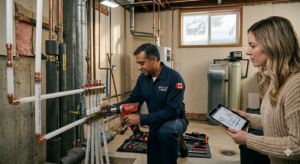
Step 1: Inspection & Leak Detection
Experts use advanced tools for plumbing leak detection to locate hidden leaks and assess overall pipe condition.
Step 2: Cleaning the System
Before replacement, techniques like hydro jetting are used to clear debris, grease, and buildup from pipes.
Step 3: Pipe Replacement
Damaged or outdated pipes are carefully removed and replaced with modern, durable materials suited for Canadian climates.
Step 4: Testing and Final Checks
The entire system is tested to ensure proper water flow, pressure, and leak-free performance.
Professional Service Across the GTA: Pioneer Plumbers Inc.
In matters of ensuring integrity of the infrastructure in your home, it is necessary to have a good partner close by. Pioneer Plumbers Inc. offers residential plumbing services and commercial plumbing services throughout Southern Ontario. We have a licensed team available in strategic positions to reach you in case of a burst pipe at midnight or you want to do a massive renovation.
Our experienced team understands local challenges like freezing temperatures, aging infrastructure, and seasonal plumbing issues common across Canadian homes.
- Fast response from local plumbers in your area
- Expert diagnostics and long-lasting plumbing repair solutions
- Access to a 24 hour plumber and same day plumber when needed
- Honest pricing with no hidden surprises
Contacting a plumber company that has thorough knowledge of these particular municipal infrastructures, you will be sure that all plumbing repair will be done according to local building codes and be able to survive the particular climate of Canada. We bring professional transparent services to you; whether it is stopping the entire bathroom faucet dripping or simply clearing out clogged sewer lines.
Final Thoughts
Your plumbing is noiseless; it works every day. It can manage the Canadian winters, tough water, decades of service and all that your household subjects it to. Yet it will not be forever and being able to sort things out at the early stages will always be cheaper than handling a crisis.
In case your house is older than 30 years old or you are experiencing any of the red flags mentioned above, you should call a same day plumber or an appointment with your local plumbers. Your pipes have no timeline to plan the repairs or replacement, a professional eye will tell you precisely where you are and allow you to schedule the repairs or the replacement on your timeline, not theirs.
You require a plumber service, full drain repair, plumbing leak repair, foundation leak repair or a full replacement of the entire pipe, regardless, contact skilled plumbers in my area who are aware of the Canadian homes and Canadian conditions. Find the best plumbers near me or a good plumber close to me to start today. Certified commercial plumbing specialists can also be found in most Canadian cities in regards to business properties.
Do you need this assistance in finding a reliable plumber in your area? It can be residential plumbing, drain repairs, or a complete replacement of the pipe, but one thing is to find out the time-tested local plumbers in the neighbourhood who know about the Canadian homes and the conditions in Canada.