
When you own or run a commercial building in Canada, be it a restaurant in Calgary, a shopping strip in Mississauga, or an office building in Vancouver one of the last things you want to roll dice over is your plumbing system. One burst pipe or clogged sewer line can put your business out of business in a matter of days, costs you thousands of dollars and has you rushing out to find an emergency plumber during the -30°C winter.
The biggest question any Canadian business owner would one day pose is: What is the frequency at which commercial plumbing needs to be inspected? The truthful answer is contingent upon some major considerations, yet there are evident best practices to adhere to.
Why Commercial Plumbing Inspections Are Non-Negotiable
Daily use of commercial plumbing systems is much higher than residential. More toilets running, more sinks running, more drain pipes straining all the time. The strain of this high usage causes wear and tear and the Canadian climate presents an additional layer of danger that houses in warmer climates do not have.Plumbing frozen pipes, freezing-thawing ground movements, mature infrastructure in older Canadian buildings and more, all contribute to the risk of undetected water leakage, corrosion, and clogging of pipes. These problems typically get to be detected by licensed commercial plumbers who conduct regular inspections to ensure they do not escalate into costly problems.
In addition to the cost savings, there is also compliance. The commercial properties are required to have systems that follow the standards of health and safety such as having annual backflow preventer tests, a requirement in most municipalities, under the National Plumbing Code of Canada 2020 (in force since April 1, 2023).
How Often Should You Schedule a Commercial Plumbing Inspection?
There’s no universal answer, but here are the general guidelines followed by reputable commercial plumbing companies across Canada:
1. Annual Inspections (Minimum Standard)
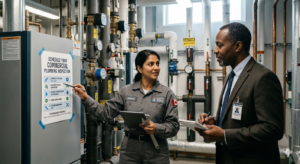
A complete plumbing evaluation should be done at least once a year on most commercial properties. This includes a visual inspection of all drain pipes and plumbing pipes, water pressure test, plumbing leak detection, and inspection of fixtures and water heaters. Backflow preventer testing as mandated by local regulations also fits well with annual backflow preventer inspections.
2. Quarterly Inspections (High-Traffic Properties)
Ideally, the systems of restaurants, hotels, healthcare facilities, and any industrial plumbing environment should be inspected at least once every three months. The usual suspects in these environments are grease, hair, and heavy sediments. Having a commercial drain cleaning schedule quarterly will avoid backups that may hamper operations.
3. Every 6–12 Months for Drains and Sewer Lines
Most commercial properties should be inspected with camera equipment after every six to twelve months, to check the drain and sewer lines. This allows you to determine the presence of clogged sewer line, root intrusion or corrosion at an early stage before you are calling and getting services taken up by the same day plumber.
4. Immediately If You Notice Warning Signs
When you notice slow running drains, a bathroom faucet dripping, inconsistent increases in your monthly water bill, low water pressure or even water leakage anywhere, then don’t wait till you have the next scheduled inspection. Immediately, call a local plumber or commercial plumbing service. They are the signs of greater issues such as a burst pipe, a sewer line clog, or a leak of a pipe that might grow exponentially.
What Does a Commercial Plumbing Inspection Actually Cover?
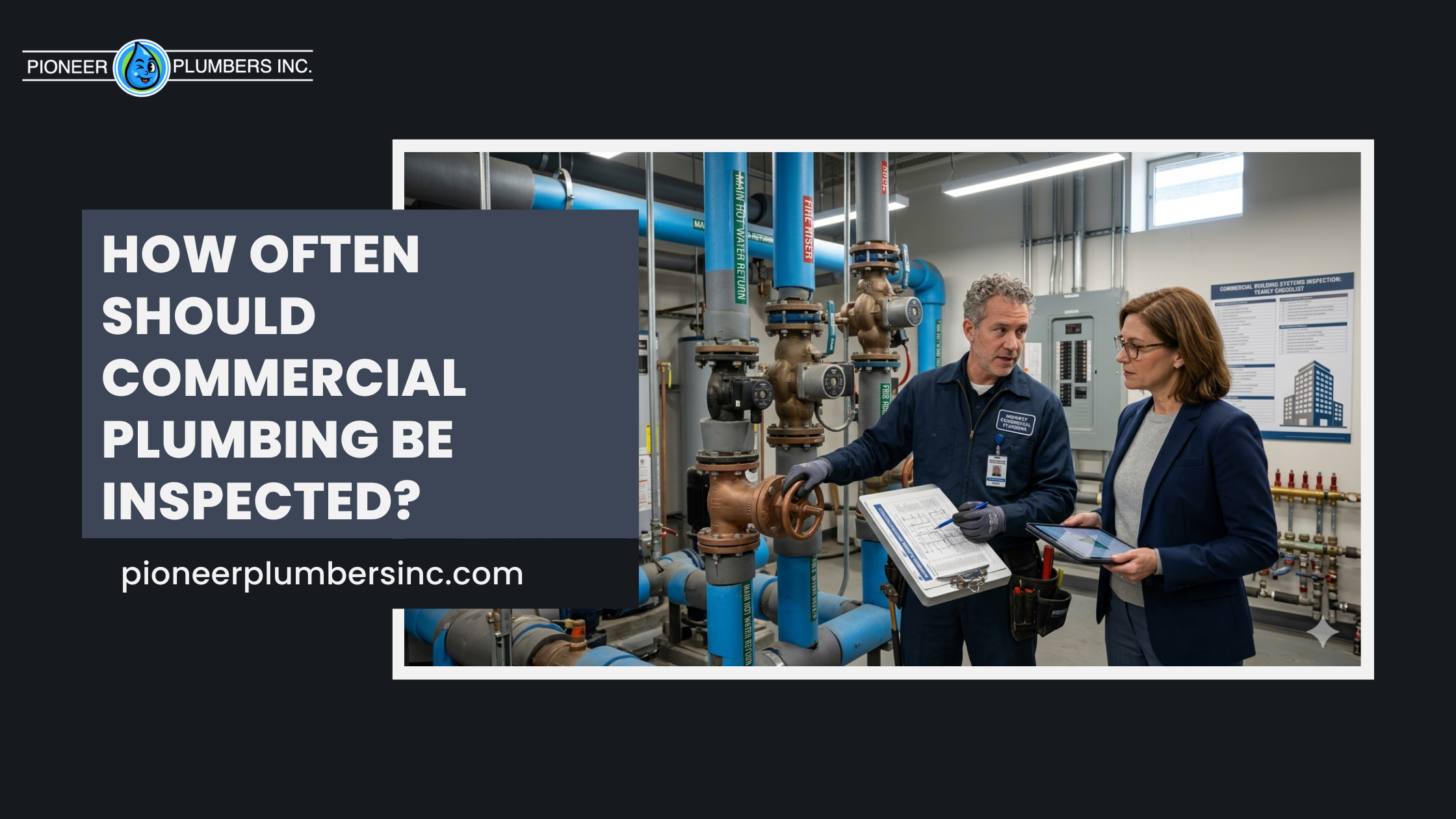
Comprehensive commercial plumbing inspection by certified commercial plumbers would generally involve:
- Pipe inspection – Inspecting all exposed plumbing pipes to determine any rusting, cracks, corrosion, or water destruction. This often also includes checking of cameras in the drain pipes to detect what cannot be seen with the naked eye.
- Leak detection – Professional plumbing leak detection detects concealed pipe leakages behind walls or under floors before they lead to structural destructions or moulds.
- Water pressure check – Water pressure above 80 PSI can silently destroy fixtures, angle stops and water heaters with time.
- Backflow preventer testing – A legal requirement in most commercial buildings in Canada. These are used to stop water that is contaminated to enter the clean water supply.
- Drain and sewer inspection – The inspection is done to identify indications of sewer line clog, pipe obstruction, and blockages that may need hydro jetting to remove.
- Fixture review – Toilets, taps, urinals, water heaters, etc. shall be examined in terms of efficiency, and plumbing repair.
An excellent commercial plumbing service will include a follow-up written report following the inspection and any suggestions regarding necessary drain repairs, pipe leak repair or future maintenance – so plan and budget in advance.
Seasonal Plumbing Inspections in Canada
Canada’s climate plays a significant role in the health of your plumbing system, making seasonal inspections essential.
1. Winter
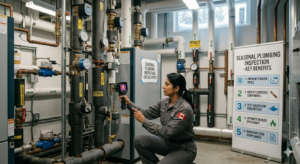
Low temperatures may result in plumbing frozen pipes, which creates pressure and can cause burst pipe scenarios. Pre-winter inspections are one way to safeguard pipes by insulating them.
2. Spring
The sewer systems may overflow as the snow melts and the amount of rainfall rises. This increases the possibility of sewer backups and spring inspections are important in avoiding sewer line repair near me emergencies.
3. Fall
The best season to prepare your system in winter is Fall. Checkups at this time of the year will assist in determining vulnerabilities and making sure your plumbing system is prepared to face extreme cold.
Does the Age of Your Building Matter?
Most certainly, and this is the point many Canadian property managers do not take into account. When your building is over 20 years old, the plumbing system is something that should be paid more attention to. Older pipes are likely to experience corrosion, scale formation, and failure. Most plumbing pipes last between 20 and 50 years, but other types of plumbing pipes such as cast iron, PVC, and PEX may last much longer when well maintained.
There is also the possibility of older buildings being constructed with an old code and may not meet the present National Plumbing Code of Canada. An inspection by adept commercial plumbers will identify any lapses in the rules and suggest plumbing repair or upgrades before it becomes a compliance matter.
How to Find the Right Commercial Plumbing Company
When selecting a partner to your facility, it is important to seek licensed expertise and special equipment. You require a group that learns industrial plumbing and has the ability to offer a same day plumber when your operations are at stake.
Pioneer Plumbers Inc. is a reputable company specializing in the commercial plumbing services and industrial plumbing services. With their office in Guelph, Richmond Hill, Newmarket, Vaughan, and Aurora, their professionally licensed team is experts in all routine maintenance or intricate sewer line repair near me. They focus on quick response time and reliability of the system in the long run of business owners in Ontario.
- Licensed & Insured: Ensure they employ Red Seal commercial plumbers with WSIB and liability coverage.
- Transparent Pricing: Look for upfront quotes and flat-rate models for plumbing repair to avoid hidden fees.
- On-Time Professionalism: A same day plumber should respect your business hours and arrive equipped for the job.
- Advanced Tech: They must use industrial tools like hydro jetting and fiber-optic cameras for accurate drain repairs.
When Do You Need an Emergency Plumber?
Routine maintenance is vital, but some situations demand an emergency plumber immediately. If you notice these signs, your building’s safety is at risk:
- Sewer Backups: If multiple floor drains are overflowing, you have a critical sewer line clog that creates a biohazard.
- Sudden Loss of Pressure: This usually points to a major burst pipe or a failure in the main water line.
- The Smell of Gas: Sewer gas (methane) is a fire hazard and a health risk; it requires immediate plumbing leak repair.
- Flooding Near Electrical: If water leakage is near server rooms or electrical panels, shut off the water and call a same day plumber instantly.
- Frozen Pipe Risks: In Ontario, a frozen line is a “silent” emergency. If left untreated, it will become a burst pipe once the ice expands.
The Bottom Line
The general rule applied to most of the Canadian business is that at least one extensive commercial plumbing inspection at least once every year, and quarterly checks in high-use buildings are advisable. Waiting until a burst pipe or jammed sewer line strikes are reasons to take action. The price of proactive maintenance will always be less than the price of emergency plumbing repair.
Find a well-established local commercial plumbing service company, arrange frequent checks, and do not encounter the unpleasant surprises that come with business. Your plumbing system is a hard working system that needs to be treated like the rest of your facility.