
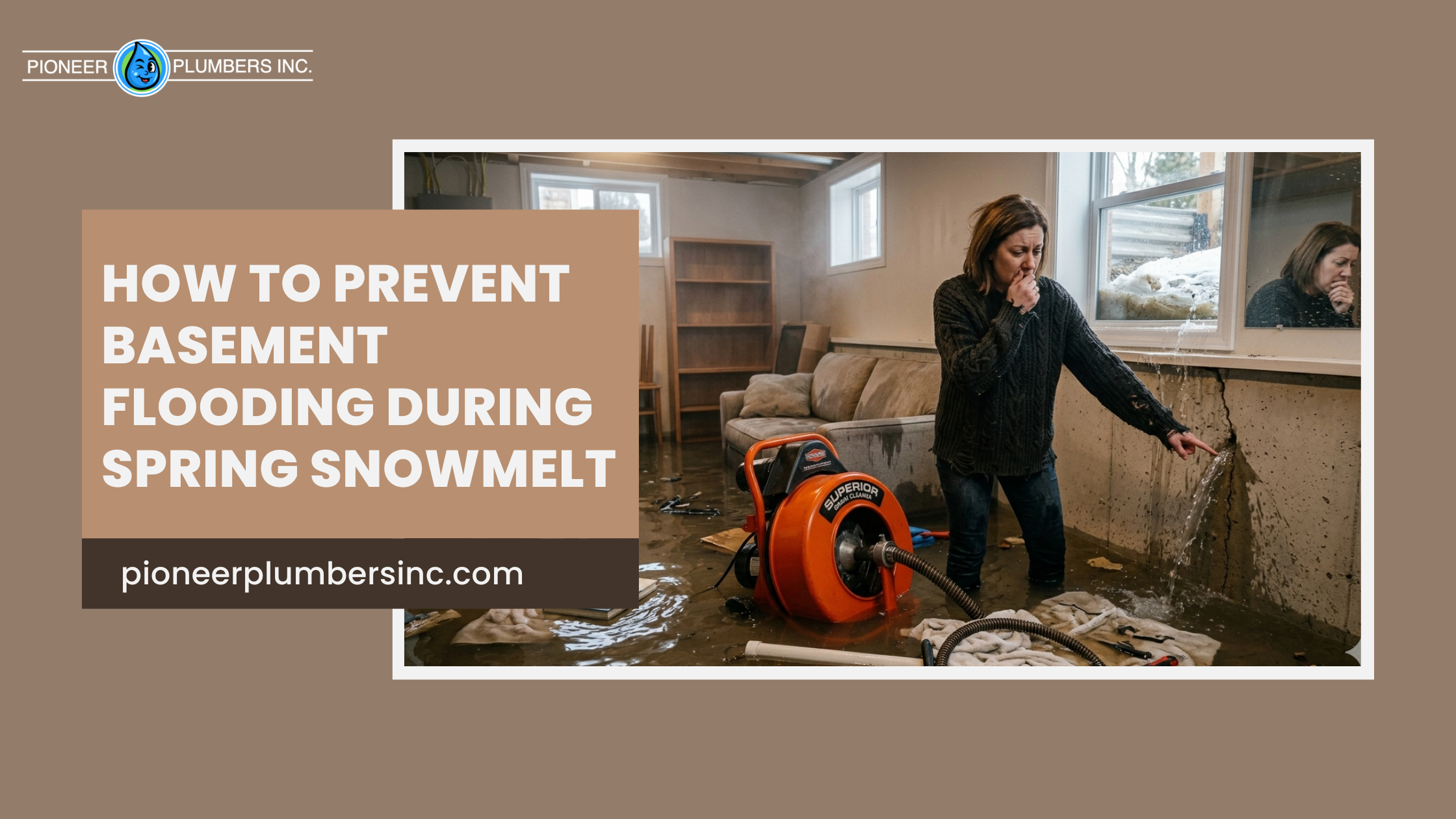

Spring is a two-sided sword to the Canadians. Although we appreciate the warmer weather and the green grass appearance, there is a seasonal headache to the so-called Big Thaw that is dreadful: a danger of basement flooding. In Ontario and other provinces as far west as British Columbia, homeowners are happy and anxious to see the snowbanks melt away.
When huge quantities of snow melt so fast, the ground will become overly saturated. Due to the fact that the soil lower down is usually still frozen the water has no other way out but to your foundation. This puts colossal pressures of hydrostatic actions, which finds even the tiniest crack on hairlines to form a leak in basement walls. This risk is the first thing to understand in order to safeguard your greatest investment.
The Canadian Spring Reality: Water, Water Everywhere
Rain is not the problem that we have to face in Canada, months of months of precipitation that have been frozen down are melting within a couple of days. This quick flowing water may flood municipal storms and the drainage of your home. Unless your household plumbing is ready to redirect this amount, then your vision might be massive water damage which will cost you a lot to rectify.
Most of the homeowners do not pay much attention to the hints of trouble. The smell can be damp or there can be a trickle around the floor drain. Nevertheless, a minor plumbing leak can easily turn into a disaster if the local water table is too high. It is not merely an implication of being proactive, but a requirement of the Canadian winter-weary houses.
What Happens During Spring Snowmelt?
In winters of Canada, snowfall gathers and builds up in heavy sheets on the roofs, lawns and the surrounding environments. When it warms up in the early spring, this snow melts at a very high rate and a lot of water is produced in a short time.
Unlike rain, snowmelt behaves differently:
- It occurs gradually during the day but refreezes at night
- Water cannot penetrate frozen soil efficiently
- It often overwhelms existing drainage systems
This implies that surplus water begins to move towards the lowest point which is the foundation of your home. With improper property grading or drainage system, water will start accumulating and will ultimately leak in basement or foundation cracks.
Why Basement Flooding Is Common in Canadian Homes
Canada’s climate creates a perfect storm for basement flooding, especially during seasonal transitions.
1. Frozen Ground Prevents Proper Drainage
The ice does not necessarily melt off the surface and the soil could be frozen deeper down. This forms a water dam that makes the water flow horizontally, rather than being taken in and puts pressure on your home.
2. Hydrostatic Pressure Builds Up
Hydrostatic pressure mounts up against basement walls as the melted snow gathers up. After some time, such pressure causes water to seep through minute cracks, joints or on porous surfaces of concrete.
3. Sudden Temperature Fluctuations
Temperatures in most parts of Canada may change radically in a couple of days. Quick thaw cycles clog the plumbing systems and drainage lines of the household plumbing systems culminating into failure.
4. Winter Debris and Ice Blockages
Outer drains and gutters may be clogged by leaves, dirt and ice. This causes the problems of drain clogged, which causes the inability of water to move properly out of your house.
Warning Signs Your Basement Is at Risk
Early detection is critical to avoid severe basement flooding repair costs.
Watch for these warning signs:
- Persistent dampness on walls or flooring
- White chalky residue (efflorescence) on concrete
- Musty or moldy odors indicating moisture buildup
- Water stains or discoloration along foundation lines
- Small cracks widening over time
- A visible leak in basement, especially after snowmelt
- Sump pump running continuously or failing to activate
Even minor signs should not be ignored, as they often indicate larger hidden plumbing issues.
The Role of Your Sump Pump System
The most essential part of your flood defense system would be your sump pump basement system. The work of a sump pump is to find the ground water in a sump pit installation and pump the water out safely out of your foundation. When you have not thumped yours “thump” into motion in a while it is time to check-it-out.
The sump pump maintenance is also essential until the slush becomes puddles. Test the discharge pipe to make sure it is not ice or debris clogged. When your unit is more than seven years old then you must take the initiative of replace sump pump parts to prevent a breakdown during a midnight downpour. In the case of homes that lack it, professional sump pump installation or swamp pump install (some even refer to it as swamp pump installation) would save you thousands in repairs in the future.
Types of Sump Pumps You Should Know
Understanding the types of sump pumps helps you choose the best system for your home.
- Submersible Sump Pumps
These are installed inside the sump pit and operate underwater. They are powerful, quiet, and ideal for handling large volumes of water.
- Pedestal Sump Pumps
With the motor located above the pit, these pumps are easier to maintain and often last longer, but they may be noisier.
- Battery Backup Sump Pumps
Essential in Canada, where storms can cause power outages. These systems ensure your pump continues working when you need it most.
Choosing the right sump pump basement system can significantly reduce your flooding risk.
The Role of Backwater Valves in Preventing Flooding
While sump pumps handle groundwater, a backwater valve protects your home from sewer backups.
What Is a Backwater Valve?
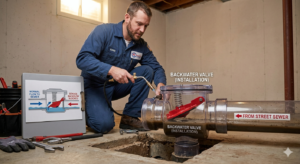
A backwater valve will ensure that wastewater does not run in the opposite way and flow into your home. During the time of down-pour or melting snow may overflow to your sewerage pipelines as a result of overstraining of the main sewerage systems.
However, even though the problem of ground water is itself upsetting, a more nauseating truth is that of sewage overflow. There are sewers in the city that might be overloaded in case of heavy snow melts. This is where a backwater valve sewer device will come into the rescue. It is one way and serves to allow your waste to leave your house but not sewage in the city coming back to your basement.
The implementation of a backflow valve sewer or floor drain with backflow preventer is not an easy task. It involves properly installing backflow valve hardware into your main sewerage. In fact, some Canadian cities have subsidies to install backwater valves because they are that effective at preventing large-scale flooding by the cities. You do not need to know you need a sewage backflow valve until a drain clogged with stuff and you realize that it is backed up.
Identifying Vulnerabilities in Your Plumbing
There are instances where water is flowing not outside but in. The pipes might move and crack as a result of freeze-thaw cycle. One of the burst pipes is called a spring phenomenon which is realized when the frozen lines melt and reveal the damage caused in the deep freeze. Plumbing leak detection is an urgent need in case there is an abrupt drop in the pressure of water or unexplainable dampness.
Patch is not quality plumbing repair. It could be a pipe leak repair or complete plumbing leak repair but it is of importance to make sure that it should be done once. When locating a local plumber, one should ensure that he or she locates individuals that listen and understand the local geological as well as climatical problems of your region to ensure that your drain repair job is built in such a manner that it will not need repair once more within the following winter season.
Common Causes of Basement Flooding During Snowmelt
Several factors contribute to basement flooding:
- Poor grading directing water toward your home
- Cracked or aging foundation walls
- Faulty sump pump systems
- Blocked or damaged drainage pipes
- Lack of proper plumbing leak detection
- Winter-related burst pipe damage
- Tree root intrusion in sewer lines
Addressing these issues early with professional drain repairs and plumbing repair can prevent major damage.
How to Prevent Basement Flooding in Spring
Taking preventive measures can save thousands in repair costs.
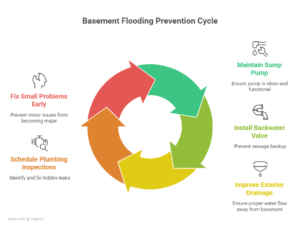
- Maintain Your Sump Pump
The sump pump maintenance will be done on a regular basis to guarantee good performance. Wipe up trash, verify functionality and check out discharge lines.
- Install a Backwater Valve
With a back flow valves system, investing in it would ensure there is no sewage backup in times of peak water flows.
- Improve Exterior Drainage
Make sure that the grading is right, downspouts are long and gutters are clear.
- Schedule Plumbing Inspections
Professional plumbing leakage detection will identify concealed problems even before they blow out of proportion.
- Fix Small Problems Early
Treat small leaks through timely pipe leak repair or plumbing leak repair in order to prevent expensive damage.
When Should You Call an Emergency Plumber?
There are cases when the spring snowmelt needs urgent professional intervention to avoid the extreme basement flooding and expensive damages.
You should contact an emergency plumber if:
- Water is rapidly entering your basement and rising
- Your sump pump stops working during heavy snowmelt or rain
- You notice a burst pipe or sudden drop in water pressure
- Sewage is backing up through drains (a sign of backwater valve failure)
- Multiple drains become blocked or you experience repeated drain clogged issues
In these situations, delaying action can lead to structural damage, mold growth, and expensive basement flooding repair.
It is where Pioneer Plumbers Inc. will be a trusted solution to homeowners in the Greater Toronto Area. You can count on their licensed technicians to be fast whenever you need their professional emergency plumbing services, drain clearing and leak repair whenever you need them the most.
Be it a midnight pipe explosion or a burst of flooding, they are in a position to deal with all that they have to do plumbing repair or even a full out system diagnosis. Their quick reaction also contributes to the minimal water damage and saves your house before the situation becomes worse.
Why Professional Help Matters for Basement Flooding
Basement flooding is rarely a simple issue. While DIY fixes may seem like a quick solution, they often fail to address the root cause of the problem.
Professional plumbers bring expertise, tools, and experience that ensure long-term protection.
What Professionals Do Better
- Perform advanced plumbing leak detection to find hidden issues
- Provide reliable pipe leak repair and drain repairs
- Inspect sump pump systems and recommend upgrades if needed
- Install protective systems like backwater valve sewer solutions
- Prevent recurring issues with complete household plumbing assessments
By selecting a reputable plumbing firm such as Pioneer Plumbers Inc. then you would be sure that your house is in the best hands. They provide the entire spectrum of services such as plumbing maintenance, clearance of drain blockages, repair of water-lines as well as identification of leaks that are necessary in preventing and solving the problem of basement flooding.
Their crew is renowned to be able to cope with small leaks through large-scale emergencies, and implement their modern methods to fix your plumbing system effectively. They also offer same day service to their customers, serving the purpose of giving homeowners the chance to rush initially when small problems develop into huge catastrophes.
Conclusion: Don’t Get Caught in the Melt
It is time to have spring and not shop-vacs and ruined drywall. With the sump pump maintenance, the functionality of a backwater valve, and the observation of any leak in basement walls, you could have the season to enjoy in a peaceful manner.
It is advisable to repair a flood before it occurs. Unless you had the drainage of the exterior of your home and internal plumbing checked this year, do it. The best surest way of keeping the basement dry and your home safe is to call local plumbers to have them check your spring tune-up.